Anyone Within Bluetooth Range Can Own Your $20,000 Humanoid Robot
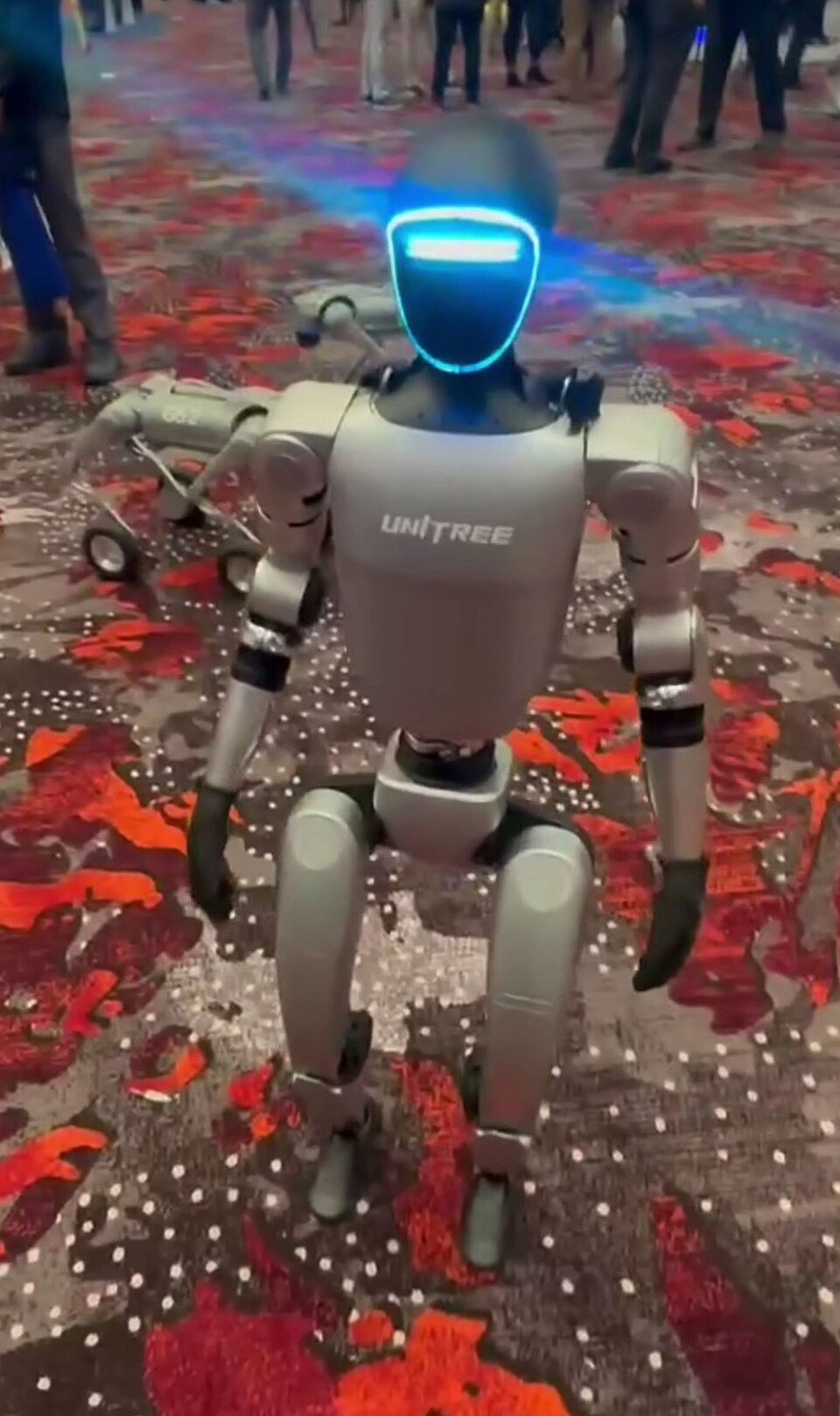
You can now buy a working humanoid robot on Amazon for around $20,000. That stopped being a future prediction the moment Unitree's G1 started shipping into homes and labs. What has been slower to catch up is the security posture underneath it, and in August a researcher showed exactly what that gap looks like in practice.
What actually happened
On August 27, security researcher Olivier Laflamme (who publishes as boschko) released a full technical breakdown titled "UniBLEed." He had spent about three months on the Unitree G1 EDU and found not one but two complete chains to root code execution on the robot's Locomotion PC, the board that drives the motors, cameras, audio, and voice. Two CVEs were assigned: CVE-2026-76639 and CVE-2026-76640. He reproduced both on four separate G1 units. Unitree verified the findings during coordinated disclosure, added an ownership check to the vulnerable cloud call, and paid a $5,000 bounty.
Understand what "root on the Locomotion PC" buys an attacker. On the G1, that machine runs a real-time Linux kernel and runs 28 services, all as root. Owning it means owning the machine.
The Bluetooth chain is the one worth sitting with. The G1 exposed a Bluetooth GATT characteristic (0xFFE2) that accepted writes with no pairing required. From there, a bootstrap command returned the robot's AES-128 key wrapped in an RSA envelope that was supposed to protect it. Except Unitree's cloud endpoint /device/bindExtData would decrypt that envelope and hand back the plaintext key to any authenticated Unitree account, with no check that the requester owned the serial number they submitted. Physical proximity was the only requirement. With that key, the attacker could hijack the robot's Wi-Fi provisioning and land a buffer overflow, a 1,050-byte write through a 500-byte buffer, that bent the event loop into running system() as root. The Bluetooth daemon crashed afterward. The shell stayed up.
Then the detail that should stop a thoughtful operator cold. UniBLEed is wormable. Once one G1 is compromised, it can push the same exploit to the next G1 in range. And the next. This is not a bug in one robot. It is a bug in a fleet.
The part that isn't about Bluetooth
The BLE overflow is a patchable engineering defect, and Unitree shipped firmware 1.5.5.0 on September 1 that reportedly closes the chain. The researcher was explicit that he has not independently verified that fix. Treat it as claimed, not proven.
The durable lesson sits one layer up, in the cloud. A robot sold to consumers shipped with a cloud endpoint that would decrypt a security credential for anyone who asked, with no ownership check. The defaults told the same story. The G1's Dev PC shipped with SSH wide open, the credentials unitree:123, and passwordless sudo. Once root was achieved, the researcher found roughly fifteen high-impact secrets sitting on the device: third-party API keys billed to Unitree's own cloud account, JWT secrets, application signing secrets, object-storage credentials.
None of that is exotic. It is the ordinary shape of a connected device built to be convenient first and owned second. Which is exactly the pattern this whole category is about.
The silo read
Good for silos. A $20,000 humanoid you can buy today is real progress. Five years ago this class of machine was a lab demo behind grant money. The fact that it is now commodity enough to attract a bug bounty is evidence the hardware frontier moved. And the lessons from UniBLEed are precisely the disciplines a governed system is built on: separate radio provisioning from safety-critical control services, verify ownership at the cloud boundary, kill the default credentials. Every one of these failures is a design choice you can refuse to make.
Risky for silos. Everything about this story argues against dropping a closed robot into the middle of your life. Think about what a humanoid in your home actually holds. Cameras. Microphones. The floor plan it navigates, the voices it hears, the schedule it runs on. If you cannot audit its firmware, cannot see what it sends upstream, cannot decide what it remembers, and cannot disconnect it from its maker's cloud without bricking it, then it is not a tool you own. It is a data funnel with legs, and the maker decides who drinks.
Here is where the ownership question settles it. A robot you cannot fully inspect, control, and cut off is a robot that is collecting your life on someone else's behalf. Handing your daily life to a closed robot is no different from handing it to a chat app you do not control. The maker holds the key to the door they installed in your house.
How we deal with it. A well-run sovereign setup treats any physical agent the way it treats every other intake: assume nothing, verify everything, and never let convenience outrank control. Concretely: no default credentials, ever. Network segmentation so the robot talks to your silo and nothing it wasn't explicitly granted. Local processing for anything it sees or hears. Cloud connectivity treated as a privilege you grant and can revoke, not a tether you are born with. And a hard rule that if a device's maker can reach in without your consent, that device does not get trusted with your private world.
What this means for you
If you run your life on an AI system, the robot question is arriving faster than the security question is. Right now the honest answer is that the consumer humanoid market is not yet safe to drop into a high-trust environment. Not because robots are frightening, but because the current generation is built to phone home, and most of it cannot be fully owned. That is a reason to watch, to test, and to keep control of what you adopt. It is not a reason to dismiss the category. The people who learn this test now will be the ones who know which machines are actually theirs when the capable ones land.
The distinction to carry forward is simple. Open and sovereign, or closed and capturing. Whether it is a model, a voice interface, or a biped walking your hallway, that one question tells you almost everything about whether it belongs inside your life or just inside your house.
The through-line
The more capable the devices around us get, the more of your life flows to whoever can reach into them. The robot in your doorway will either run on your governed system under your rules, or it will run on theirs. Which one shows up is a choice, and it is one you make before the thing is in your home.
This is a perspective piece from SiLO on developments across the technology frontier as they affect sovereign AI systems. Sources: Olivier Laflamme's "UniBLEed" technical writeup (boschko.ca), GBHackers and SC World coverage, and IEEE Spectrum. We did not independently verify Unitree's firmware fix.