OpenAI Is Building a Humanoid. The Question You Should Ask Is Who Owns It.
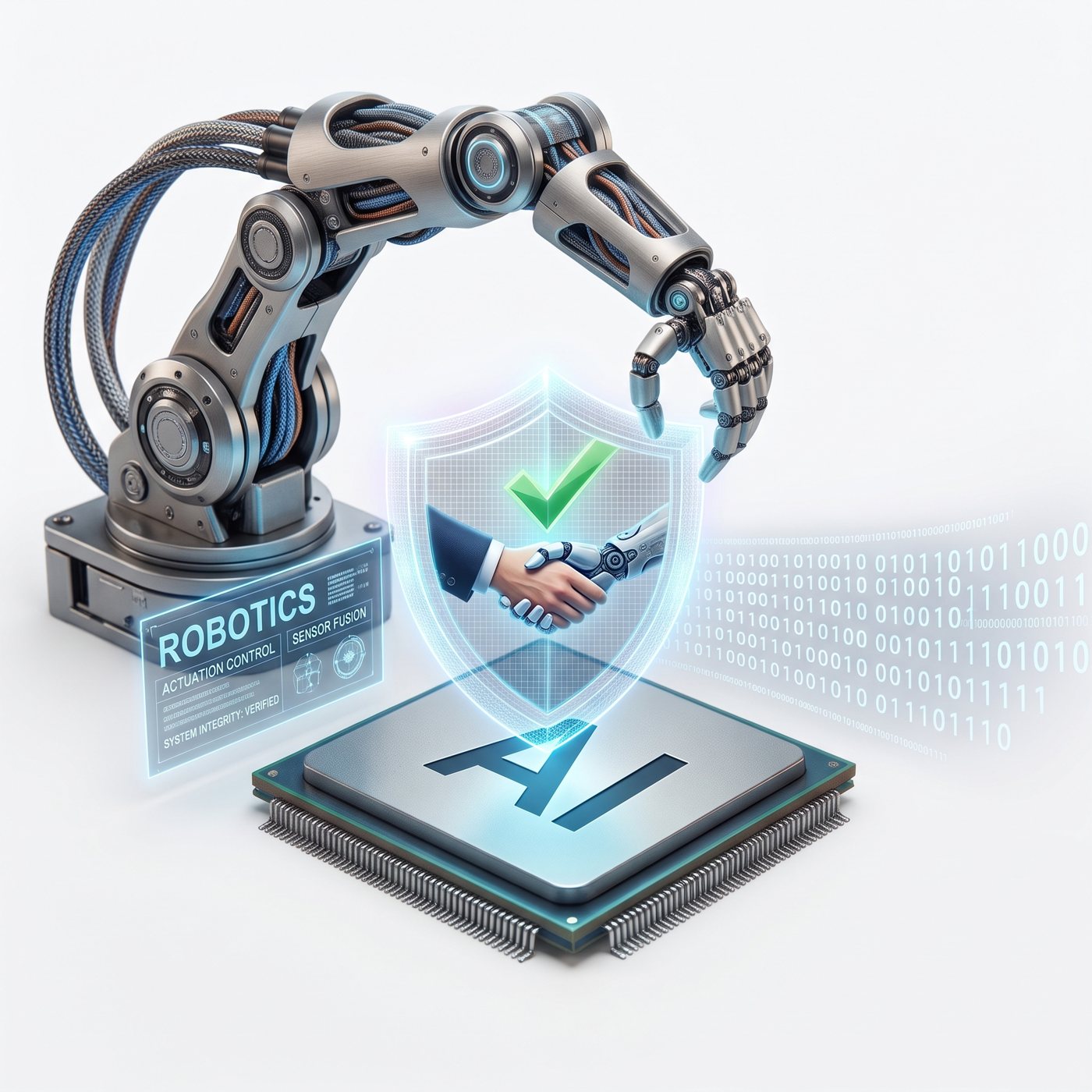
On September 2, 2026, Sam Altman confirmed on the Sources podcast that OpenAI will build its own humanoid robot: "We will definitely do a humanoid. We will do other form factors as well." Forbes covered it the next day.
If your life runs on an AI system — or you're planning for the one that will — this is the story to watch. Not because of the robot. Because the humanoid race just split into two very different worlds, and the difference decides whether a machine in your home is a tool or a data funnel.
What actually happened
OpenAI's pivot is a direct lesson from its own history. Its partnership with Figure AI ended in February 2025, when Figure said it had built end-to-end robot AI entirely in-house and no longer needed OpenAI's models. The takeaway OpenAI absorbed: if you want the real-world data that trains embodied intelligence, you need to own the body, not just the brain. That's vertical integration — one company owns the model, the hardware, and everything the robot sees, hears, and records.
Meanwhile, a genuinely different path is being built in the open. At CES 2026, NVIDIA and Hugging Face announced that Reachy 2 — a fully open-source humanoid — is interoperable with NVIDIA's Jetson Thor robotics computer, letting developers run any vision-language-action (VLA) model on it, including GR00T N1.6, NVIDIA's open humanoid model. NVIDIA also released the Jetson T4000 module (Blackwell architecture, ~$1,999 at volume, 1,200 FP4 TFLOPS, 64GB) to bring capable robotics compute down to the edge.
The silo read
Run this through the sovereignty-integrity principle and the answer is immediate: if a device, model, or platform cannot be fully owned, inspected, controlled, and disconnected by the user, then using it means feeding your personal information to a system accessible by a large company. A humanoid is the most extreme version of that test.
Good for silos. The open path is real and it's here now. Reachy 2's open hardware, GR00T N1.6's open weights, and Jetson-class edge compute mean a sovereign operator can run a capable robot fully on their own hardware — no cloud, no account, no data leaving the premises. That's the vision of a physical agent that genuinely belongs to you.
Bad / risky for silos. The closed, vertically-integrated humanoid is the sharpest data-leak channel ever built. It carries cameras, microphones, and actuators into every room of your home. If you can't download everything it knows and run it fully on your own system, you haven't bought a robot — you've installed a surveillance device that happens to walk. There is no real difference between handing your life's data to a chat app and handing it to a humanoid owned by a corporation.
How we professionally deal with it. We apply the ownership test to every physical agent before it touches a sovereign system: Can I fully own it? Can I inspect it, control it, and disconnect it? Can I extract everything it knows about me? If the answer is no, it doesn't get integrated — regardless of how impressive the demo is. When the answer is yes, we run it on local hardware with open models, so the robot serves the owner and never the other way around.
What this means for you
You don't need to buy a humanoid today. You need to decide which world you're in when you do. The companies racing to put robots in homes are betting you'll trade your data for convenience. The open ecosystem is betting you'd rather own the thing outright.
Ask the ownership test of every robot, every model, every device that touches your life. If it can't be fully owned and controlled by you, you're not the customer — you're the product, and your data is the payment.
The through-line
Every technological shift makes a sovereign life operating system more relevant, not less — because the more capable and connected the world's devices get, the more your personal information is exposed to systems owned by large corporations, unless you run your own governed, sovereign one. The humanoid race isn't an exception. It's the clearest example yet.