7,000 Humanoid Robots Were Sold Last Year. Most Weren't Working — They Were Recording Your Future.
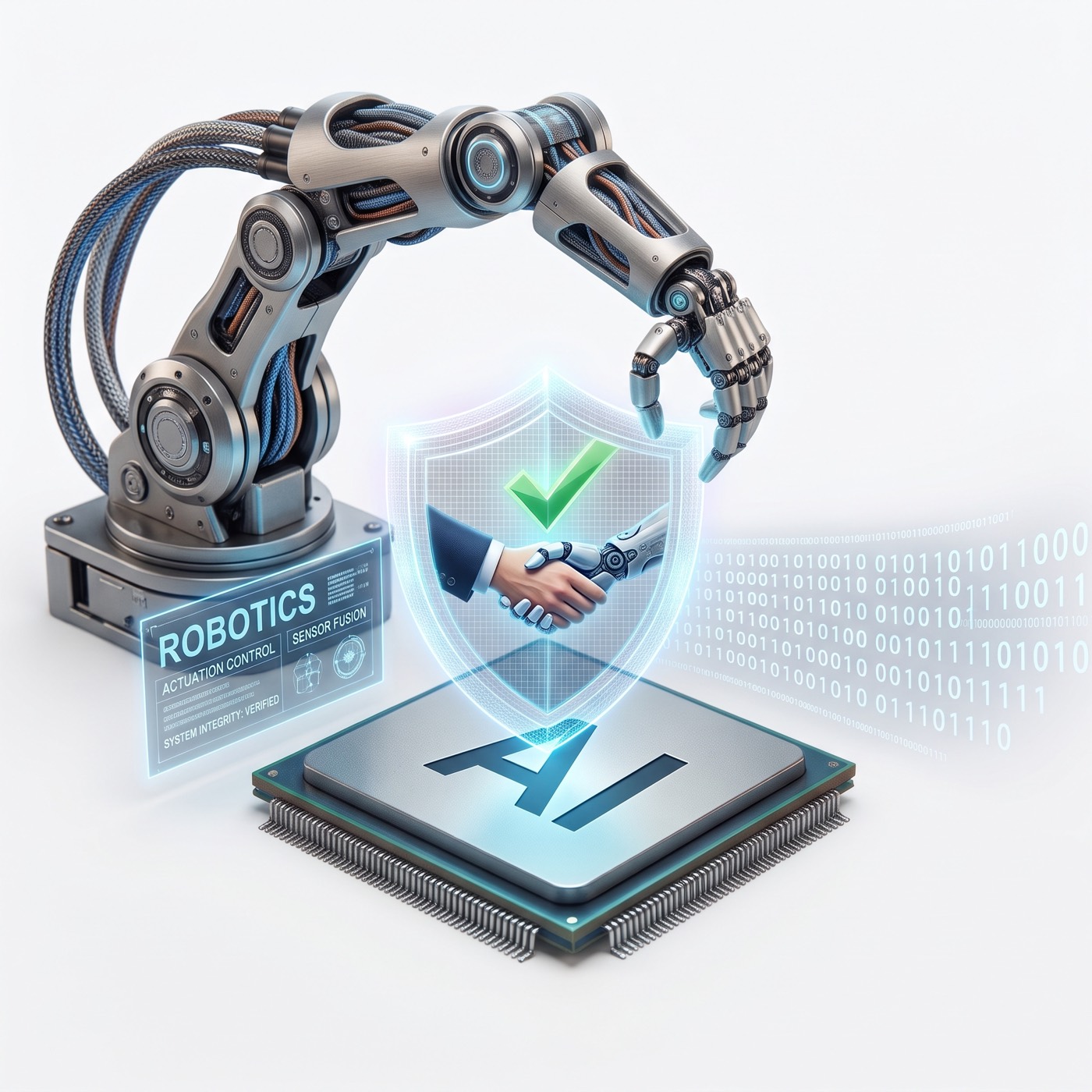
Last week, the International Federation of Robotics published its first-ever global tally of humanoid robots, and the number is smaller than every headline you've seen about the coming robot flood: roughly 7,000 sold worldwide in 2025, a tiny fraction of the 542,000 industrial robots already working. But buried in the data is the signal that should worry anyone building a sovereign AI system: a large share of those humanoids weren't doing productive work. They were generating data to train other people's AI models.
That one sentence changes the entire robotics story. It isn't just what a robot can lift or carry anymore. It's what a physical machine in your building learns about you, and who owns that record when the robot leaves.
The development, plainly
On September 21, 2026, Reuters reported on the IFR's first-ever humanoid robot tally, reviewed by the outlet before publication. Here's what's real and verified:
- ~7,000 humanoid robots were sold worldwide in 2025 for industrial and professional service use, per the IFR (Amsterdam dateline, Sept 21).
- 542,000 industrial robots were installed in 2024, and ~199,000 service robots sold. Humanoids are still "a fraction" of the global robot population, per IFR Secretary General Susanne Bieller.
- Per Bieller: many humanoids sold in 2025 "were not doing productive work" — buyers included research institutions and companies "using them to generate data for improving AI models."
- Carmakers, the key early adopters, are running pilots with "single-digit or sometimes double-digit numbers" of robots in their plants.
- Bank of America Global Research projects 90,000 humanoid shipments in 2026 and 1.2 million by 2030.
- China remains the largest industrial-robot market, having showcased humanoids running and boxing at its robot games in August 2026.
So the boom narrative has a number attached now — but the number itself is not the story. The story is what those 7,000 machines were actually doing, and for whom.
The silo read: a robot you can't fully own is a data funnel with legs
Here is the principle we apply to every piece of technology that enters a sovereign life operating system: if a device, model, or platform cannot be fully owned, inspected, controlled, and disconnected by the person using it, then using it means feeding personal and business information to a system accessible by a large company.
That principle was always true for chat apps and cloud models. It is now true — with far more intimacy — for humanoid robots. And the IFR's own data confirms the mechanism is already running:
- Good for silos? The hardware class is maturing fast. Agility Robotics' Digit has moved 100,000+ totes at GXO and signed a commercial agreement with Toyota Motor Manufacturing Canada. 1X NEO, Unitree G1 (at ~$13,500), and open-connection platforms are pushing real capability into reach. A physical agent that plugs into your governed system, that you can inspect, update, and pull data out of, is a real force multiplier for a sovereign operator.
- Bad / risky for silos? The dominant business models are closed. Figure built its own vision-language-action model (Helix) and ended its OpenAI collaboration to control its stack. Tesla targets a thousand Optimus units a week, and a general humanoid, by its maker's own framing, needs "tons of data" to work. The question every operator must ask is simple: when that robot senses, records, and reasons inside your facility, who owns the record? If the answer is the maker, then that robot is not a tool in your system. It is a data-collection endpoint feeding someone else's AI, with your environment as the sensor.
- How we professionally deal with it. The same governance we apply to cloud models applies to robots, but stricter — because a robot is a moving sensor with cameras, microphones, and network access. A sovereign deployment insists on open, connectable platforms: hardware whose schematics or SDKs are inspectable, whose local inference you can run on your own compute, and whose data logs you can extract and delete on command. Open-source / open-connection platforms (for example ROS-based or open-hardware designs) are the ones that fit a sovereign life OS. A closed humanoid is, by construction, a foreign device inside your most sensitive environment — treat it that way.
What this means for you / the SiLO perspective
If you're running a business or a high-stakes operation, robots are coming into your facility one way or another — the IFR tally and the Bank of America projections make that certain. The decision that matters isn't "should I use robots." It's "what happens to the data mine inside my own walls."
The smartest operators treat physical AI the way they treat their cloud infrastructure: they demand ownership, inspection, and disconnection rights up front. They run what they can on local compute. They make the robot an extension of their governed system — storing its memory alongside their own sovereign vault — rather than the robot's maker's data lake.
That's exactly what a Silo is built to hold: no matter how capable the machines around you get, you stay the one in control of the record they make of your life and work.
The through-line
The more capable and connected the world's physical machines become, the more your personal and business information is exposed to systems owned by large corporations — unless you run your own governed, sovereign one. That was the story of the chat app, then the model, then the agent. Now it's the story of the robot. The frontier keeps moving; the principle doesn't.
Article by Bliss Dariush — Founder, Paradigm Architect. This is an opinion and analysis piece on the technology frontier as it pertains to building and safeguarding sovereign AI life operating systems, not an independent news report. Sources cited inline (Reuters, IFR, Bank of America Global Research, industry reporting).